Portfolio

"Somewhere I read of the freedom of assembly. Somewhere I read of the freedom of speech. Somewhere I read of the freedom of press." - MLK Jr.

Published and broadcast journalism, followed by my global health and research work.

Journalism

Closed Doors, Open Outbreak

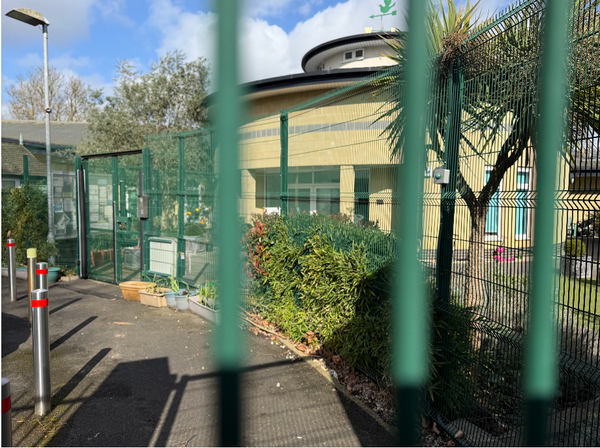
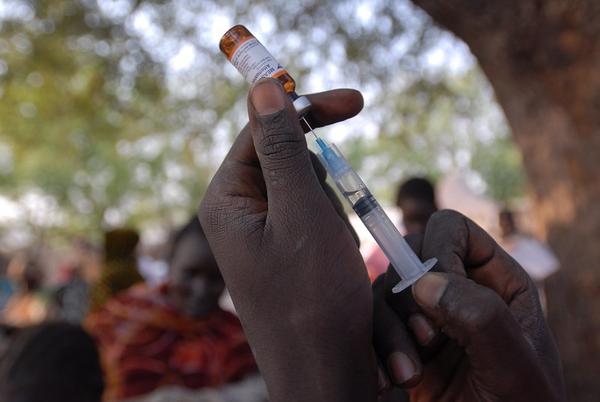
An investigation into the relationship between children's centre closures and childhood vaccination rates across London. Based on seven Freedom of Information responses, four public datasets, and 11 on-record interviews, the investigation examines whether any government body has assessed the impact of closing community health infrastructure on vaccination uptake during England's worst measles outbreak in a generation. Pending publication.

Will History Repeat Itself?

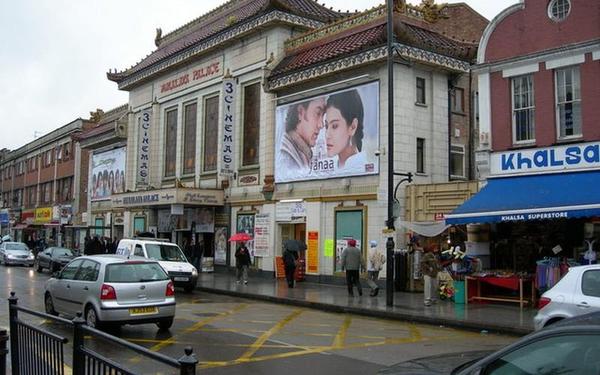
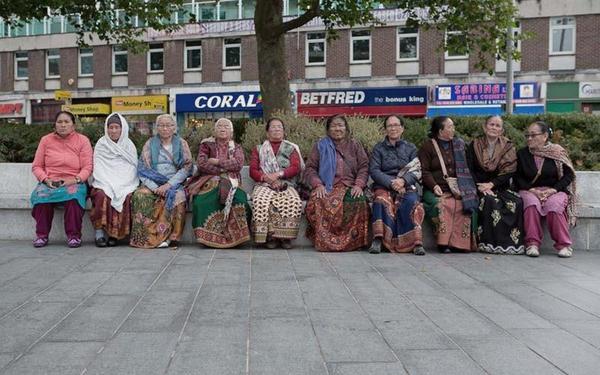
Britain's South Asian community arrived to hostility and answered it with solidarity rather than division. This feature asks whether that instinct still holds now, as the right rises again.
I reported it in Southall and across other parts of London, following the thread from the community's post-war arrival, through the racism it faced, to the solidarity that carried it. Reform UK's gains in 2026 gave the question its urgency: is that old unity being tested once more?
The story rests on three people. Sarjit Kaur Rattan, known as Biji, is 88. She came to Britain from Kenya and lived the racism, and the fierce solidarity that answered it, firsthand. Suresh Grover has spent four decades fighting racism; he co-founded the Southall Monitoring Group and stood with the family of Stephen Lawrence. Sadiya Ahmed, of the Partition Memorial Trust, works to keep these histories from being lost.
This piece is personal. During Partition, my grandparents crossed from Lahore to Delhi. In the 1980s my family moved again, to New York, where I was born and raised. I grew up on stories of Indians and Pakistanis in America finding each other, of strangers who became family. The border that split our grandparents mattered less there. At home we had a word for that bond: ekta. I knew what it looked like in New York. I did not know whether it had made its way to Britain, or whether, generations on, it still holds.
Built in Shorthand, the feature brings together text, video and audio for a national readership that believes a community is stronger together than apart.
"I was just trying to survive the day": The human cost of NHS waiting lists

When NHS England's waiting lists hit record highs, the headlines focused on numbers. This investigation went further, combining newly released NHS data with patient interviews to show how deprivation, ethnicity and gender shape who waits longest for care. From funding formulas that disadvantage deprived areas to a system that favours patients who can navigate it, the findings raise questions about whether care is still allocated on the basis of need.

From Emissions to Energy Access: Turning Hospital Diesel into Climate Finance

Third author on research presented at the IEEE Global Humanitarian Technology Conference (2025) and Stanford's Center for Innovation in Global and Planetary Health Convening (2026). The study combines machine learning with hospital data from the Democratic Republic of the Congo to detect diesel generator use, quantify emissions and link air pollution to respiratory health risks. It proposes financing pathways that channel carbon credits into solar energy for hospitals. I contributed the health framing and climate finance analysis.

Breaking the Survival Economy

As a 2023 to 2024 Albert Schweitzer Fellow, I partnered with Larkin Street Youth Services to create BEST+, an economic empowerment programme for homeless and transitional-age youth in San Francisco. It ties conditional cash transfers to training in financial literacy, entrepreneurship, vocational skills and early investing, shifting support from emergency aid to long-term resilience. The programme was IRB-approved through UC Berkeley and developed with Larkin Street leadership.

Empowering Women Initiative

A programme addressing economic instability, gender inequality and climate vulnerability in rural Nepal, with Dhulikhel Hospital, GeoKrishi, the Nepal Internet Foundation and Hamro Janakalyan Credit Cooperative. It equips women farmers with digital tools for precision agriculture, soil testing and climate-adaptive farming, and establishes internet hubs that also serve schools and health clinics. A conditional microfinance model links loans to digital literacy milestones. The programme is designed to reach 2,000 women across Dolakha, Bishuntol, Tamakoshi and Boach.

Poverty and the Rise of Drug Resistance

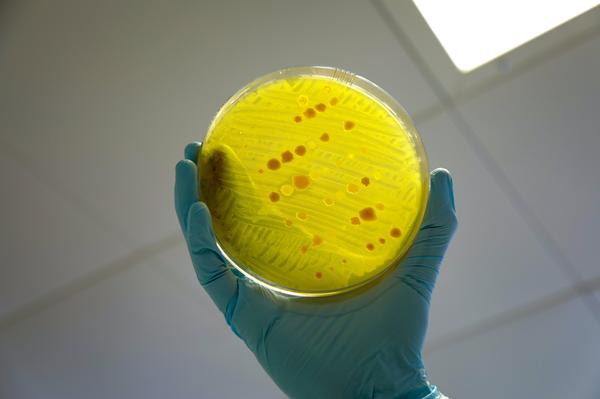
With Karuna Trust, under the mentorship of Dr Sunitha Chandrasekhar Srinivas, I supported antimicrobial stewardship across 29 primary health centres in rural Karnataka. I audited prescribing practices, supported community education on antibiotic use and helped with data collection for state surveillance. The work showed that antimicrobial resistance is as much a socioeconomic issue as a clinical one. Patients often ration or stop antibiotics early because of cost, or turn to informal providers.